

Spotting Tiger in Kaziranga
Kaziranga National Park is synonymous with one-horned rhinoceroses and sprawling grasslands, but for many wildlife enthusiasts, the elusive tiger remains the ultimate prize. Unlike the open forests of other reserves, Kaziranga’s dense, tall elephant grass makes tiger sightings a rare and thrilling experience. Our recent trip to this UNESCO World Heritage Site proved just how rewarding patience and persistence can be.
The Challenge of Spotting Tigers in Kaziranga
Kaziranga’s unique landscape, dominated by elephant grass as tall as an elephant itself, presents a double-edged sword for wildlife photographers and enthusiasts. While the grass provides a safe haven for predators like tigers, it also makes them incredibly hard to spot. This elusive nature adds an air of mystery to every safari, where the possibility of a sighting keeps you on edge.
The First Encounter
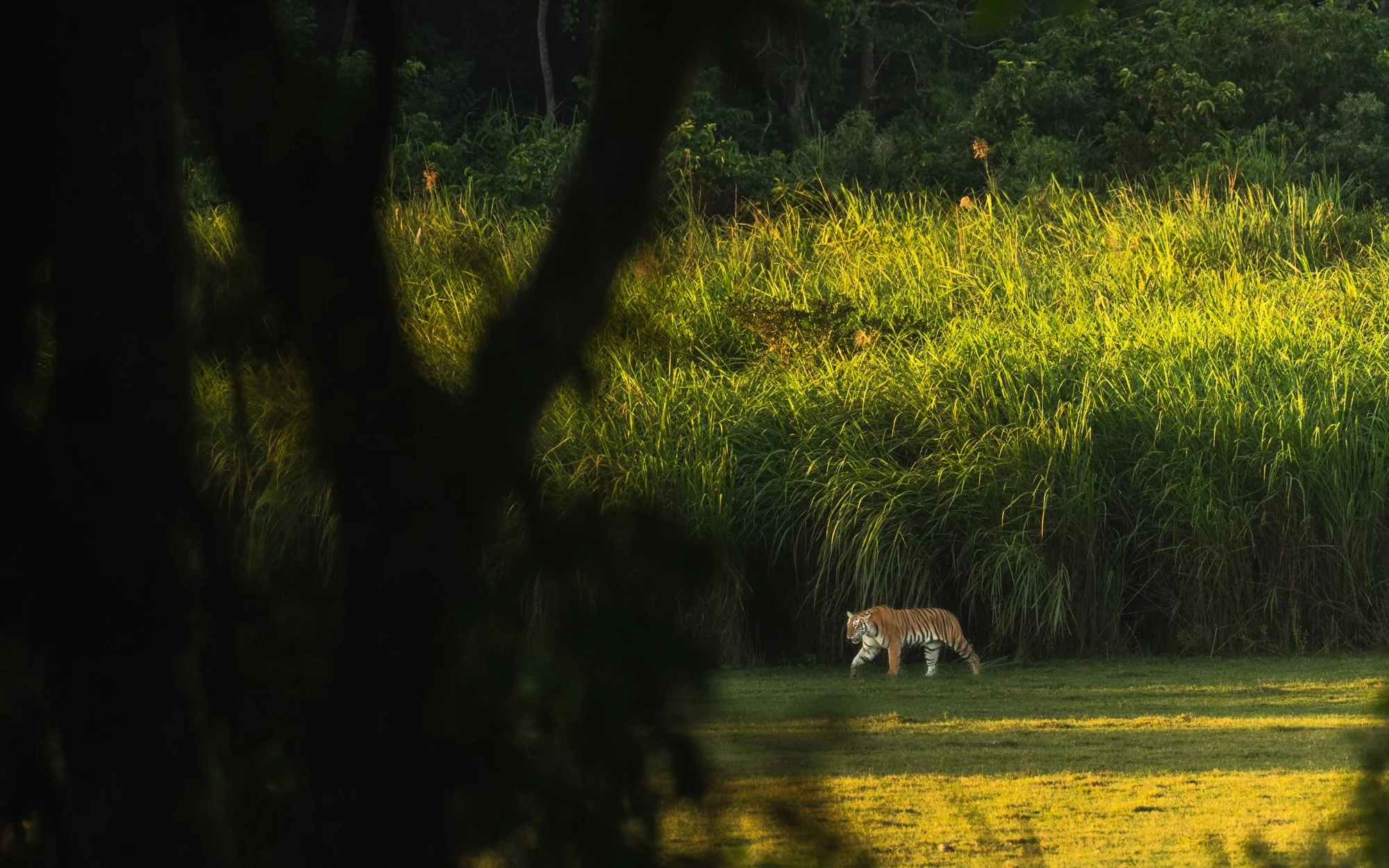
Our first brush with a tiger came after hours of traversing the park. The naturalist guiding us had picked up on subtle signs from Hog deers as they started to be alert. With our hearts racing, we waited in silence, scanning the area near the dense grass. Suddenly, the unmistakable stripes of a tiger emerged, moving gracefully as the deers started to flee for their lives.
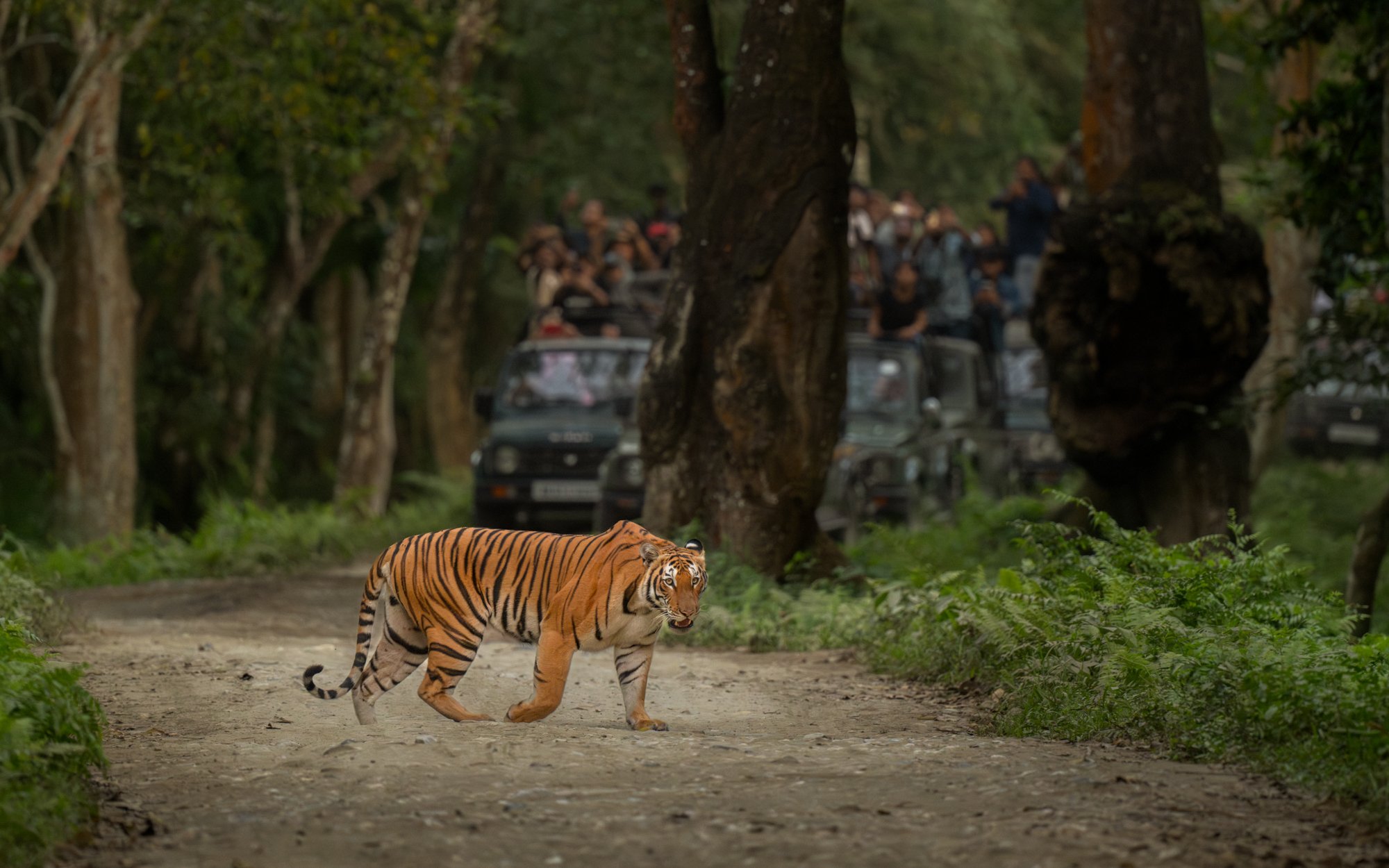
It was a fleeting moment, lasting just a few seconds, but it left us in awe of this majestic creature that emerged again to cross the road like our driver predicted.
A Magical 25 Minutes
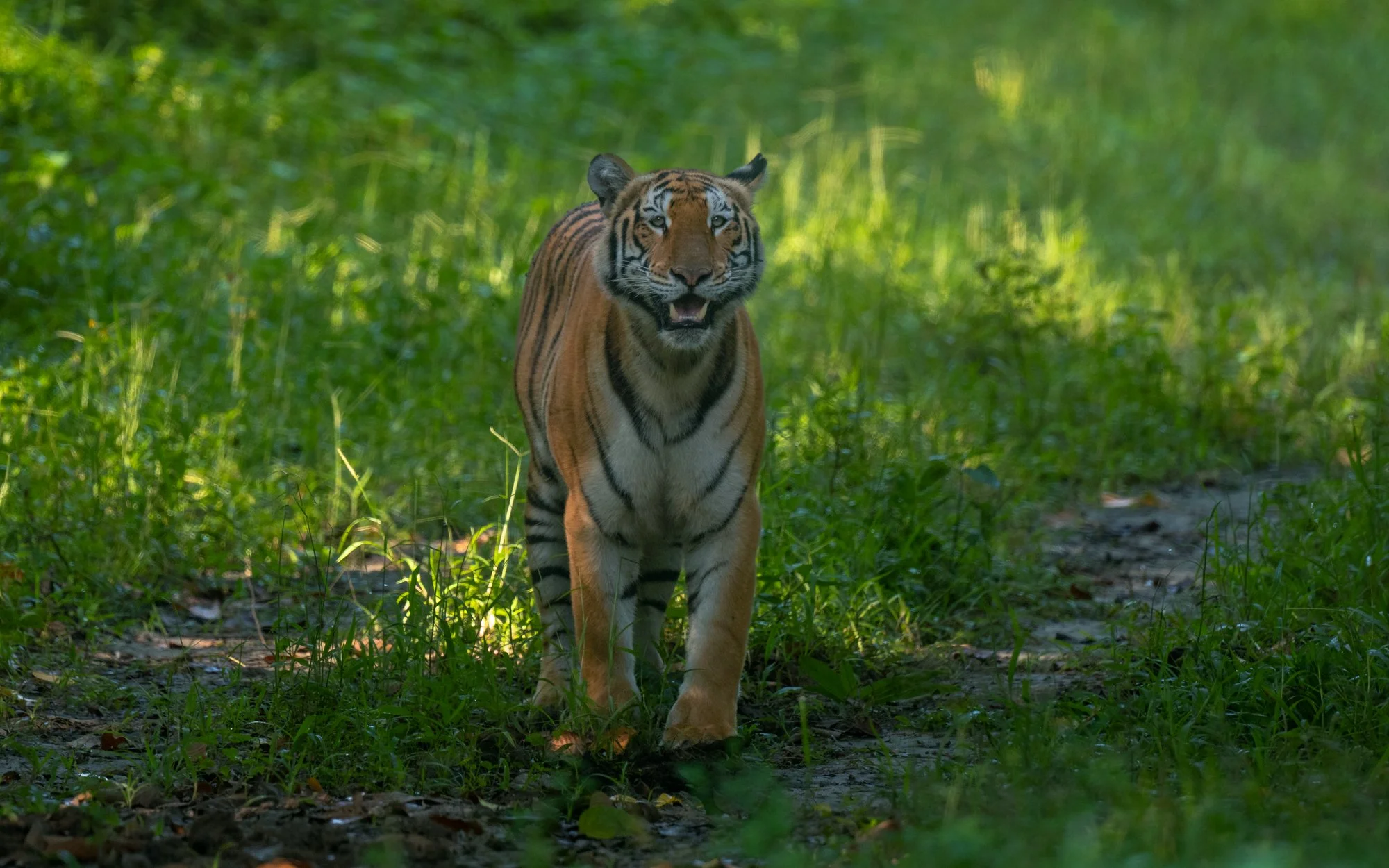
The second sighting was nothing short of magical. On an early morning safari, as the mist lifted to reveal the lush greenery of the forest, we were greeted by a once-in-a-lifetime spectacle. A tiger, seemingly unbothered by our presence, strolled out into the open. For nearly 25 minutes, we had the striped beauty all to ourselves.
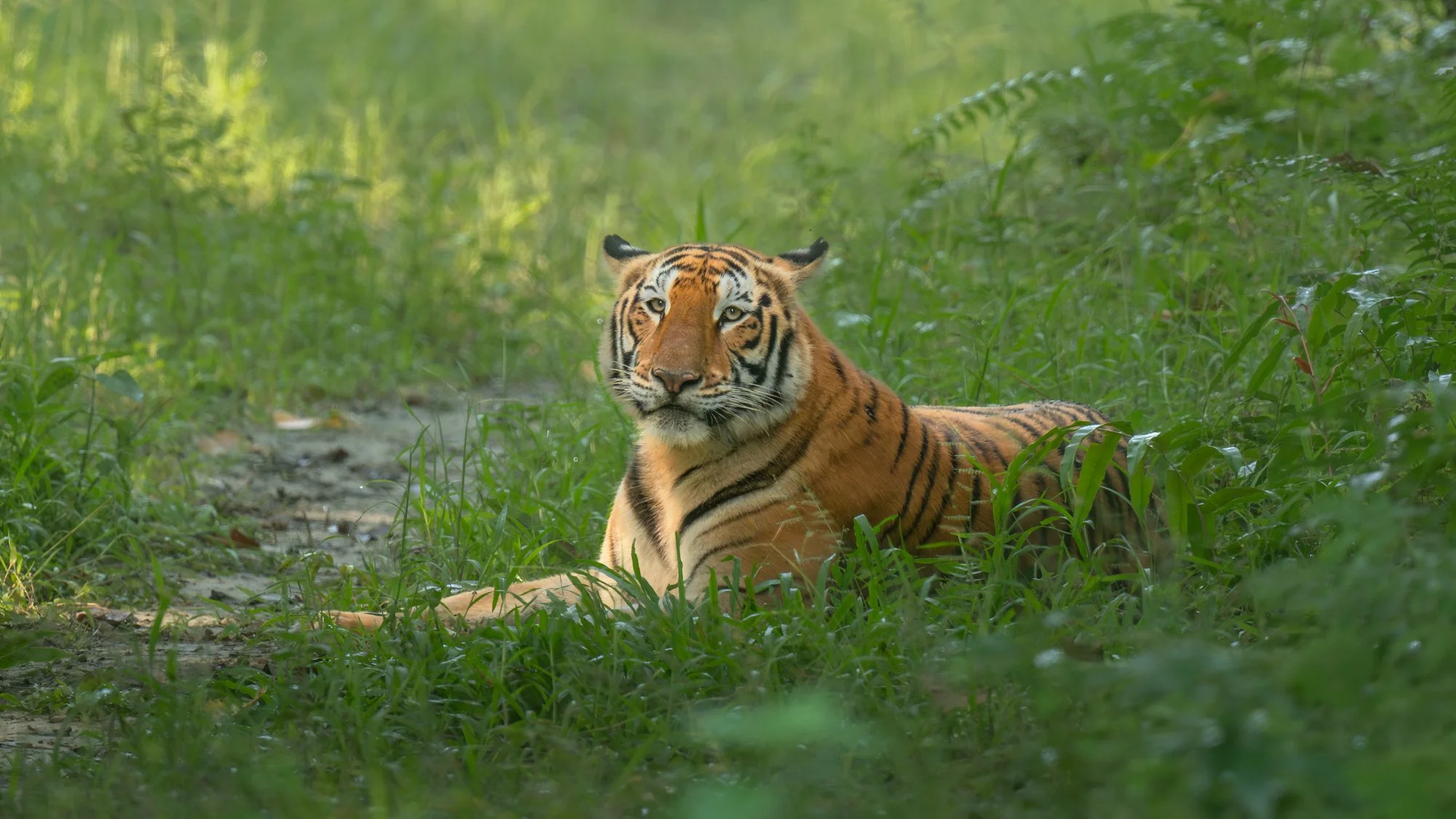
It was a surreal experience. The tiger’s amber eyes glistened in the soft light as it sat amidst the emerald forest. At times, it paused to take a look at us, the vibrant green backdrop enhancing its already stunning coat. The silence was punctuated only by the occasional call of a distant bird, amplifying the intimacy of the moment. As photographers, we couldn’t have asked for a better setting.
Lessons from the Wild
This experience reaffirmed the importance of patience in wildlife photography. In Kaziranga, where tiger sightings are far from guaranteed, persistence pays off. Spending time understanding the ecosystem, listening to the forest’s cues, and trusting the instincts of seasoned guides all contribute to these rare encounters.
Tips for Spotting Tigers in Kaziranga
If you’re planning a visit to Kaziranga and hope to spot a tiger, here are some tips:
Be Patient: Tigers in Kaziranga are masters of camouflage. Sightings often require long hours of waiting and keen observation.
Look for Signs: Alarm calls, pugmarks, and even fresh scat can indicate a tiger’s presence. Pay attention to your guide’s/driver's observations.
Go Early or Late: Early mornings and late afternoons are the best times for tiger activity. The cooler temperatures make them more likely to venture out.
Work with Experts: A skilled drivers and guides can make all the difference in interpreting the subtle signs of tiger activity.
Stay Quiet: Noise can scare away wildlife. Maintain silence to increase your chances of a sighting.
Reflections
Kaziranga’s tigers may not be as easily visible as those in other reserves, but that’s what makes each sighting so special. These moments remind us of the untamed beauty of the wild and the privilege of witnessing it firsthand. Our 25 minutes with the striped majesty in the lush green forest will remain etched in our hearts forever, a testament to the wonders of patience and the magic of nature.
Kaziranga is a place where the journey is as rewarding as the destination. Whether it’s the thrill of spotting a tiger or simply soaking in the park’s serene beauty, every visit leaves you yearning for more.